
Meltdown Tips for the "Littles" (From a Mom Who Gets It)


When your child hits meltdown mode — they’re beyond the point of no return.
I always tell people — this isn’t “bad behavior.” It’s more like a panic attack. Their brain and body have gone into survival mode. You can’t reason with them. You can’t logic them out of it. And trust me — I’ve tried.
The best thing you can do is support, not control.
First Step: Protect Their Space, Not Their Reputation
Instead of trying to physically move your child, clear the area around them.
If there’s an audience — other kids, adults, curious strangers — kindly ask them to give space. The fewer eyes, the better. Meltdowns are already overwhelming without an audience.
If there are unsafe objects nearby, calmly move them. Narrate your actions in a quiet, matter-of-fact way:
👉 “I’m just moving this over here.”
👉 “I’m going to put this away for now.”
No big deal. No commentary. Just keeping things safe.

Reset the Nervous System (Even If It Feels Weird).
Once it’s safe to do so, grab something cold.
Popsicle
Freezie
Ice cube
Ice pack
Ice cream
It might feel strange offering a treat in the middle of a meltdown, but hear me out — cold physically helps reset the nervous system. You’re not “rewarding bad behavior.” You’re helping their overwhelmed body come back down.
Want to know why cold works? It stimulates the vagus nerve, which plays a huge role in calming the nervous system:
Don’t ask. Don’t explain. Just quietly offer it, or place it near them within eyesight. No pressure.
I’ve done this so many times. It feels awkward at first — but it works. I promise you that regulation is the goal and that you are not reinforcing "behavior" by offering this choice.
Respect the Bubble
If your child doesn’t want you in their space, respect that. Most kids still want you near — they just don’t want you crowding them.
Stay close. Stay calm. Stay quiet.
Honestly? This part can be hard for us. Meltdowns are intense — the crying, yelling, even physical reactions — it’s a lot.
I’ve learned to focus on my own breathing. I remind myself — my calm helps their calm. If I lose it, I can’t help them.
Say Less. Hold Space More.
If you have to speak, keep it simple and soft:
💬 “I’m sorry this is happening.”
💬 “I’m here for you.”
💬 “You’re safe.”
💬 “I love you.”
That’s it. You’re not there to fix it — you’re there to ride it out with them.
What NOT to Do (No Shame Here — I’ve Done These Too)
❌ Don’t try to reason or lecture mid-meltdown
❌ Don’t threaten punishments or consequences
❌ Don’t over-talk
❌ Don’t shame or blame your child
❌ Don’t take it personally
Your child isn’t “choosing” this. Their nervous system has officially left the chat.
Meltdowns Aren’t Choices
Here’s the thing:
Meltdowns are not defiance.
Meltdowns are not manipulation.
Meltdowns are a nervous system hitting overload.
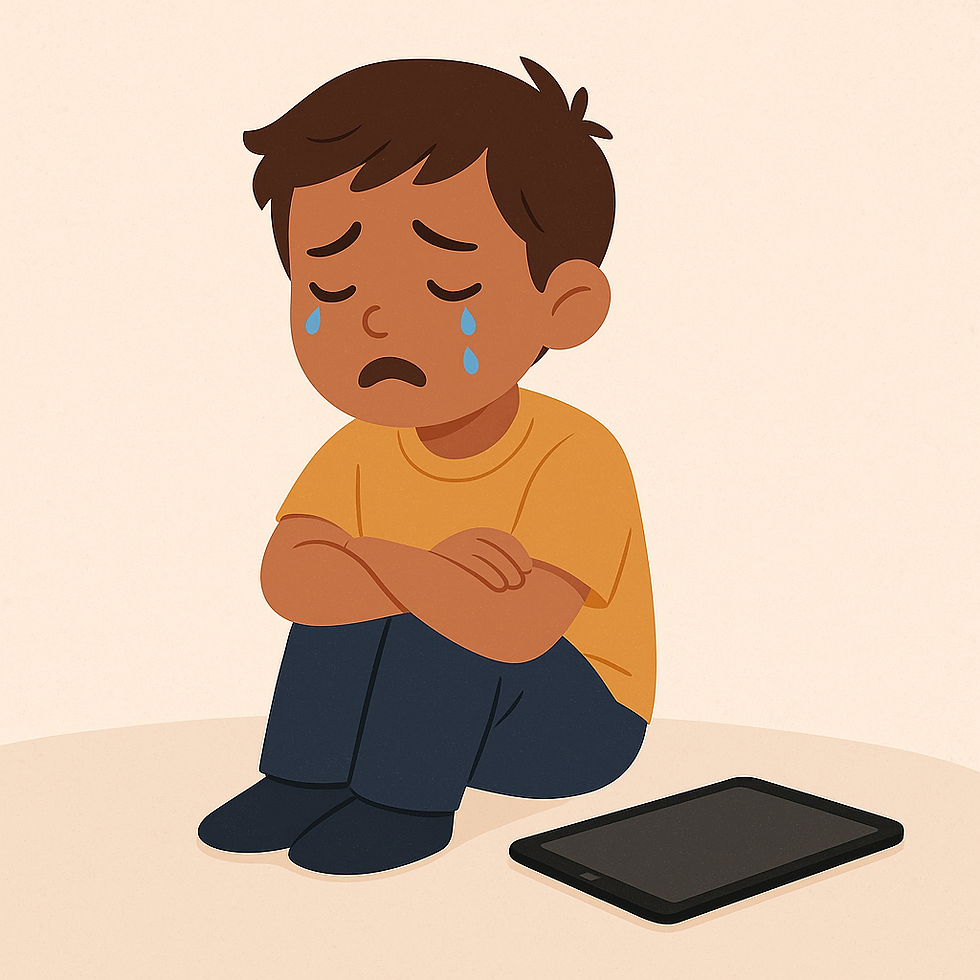
This is where Dr. Ross Greene’s work comes in — a reminder I lean on often:
If they could handle it differently in that moment — they would. But their overwhelmed, underdeveloped nervous system makes it impossible.
No amount of threats, sticker charts, timeouts, or rewards will change how their body reacts in that moment.
I always tell people — it’s like when you get so mad you finally snap at your boss… in that moment, do you care about losing your job? Nope. Your logical brain is gone. It’s pure survival mode.
That’s exactly what our kids experience — only their brains are still under construction. Emotional regulation? That doesn’t fully wire up until around 25.
This is sometimes called “the point of no return” — once the stress response fully activates, it takes time for the brain and body to settle.
Meltdown Emergency Toolkit
Having a few tools nearby can make a difference:
✔ Cold item (ice cube, popsicle, ice pack)
✔ Fidget or comfort item
✔ Noise-cancelling headphones
✔ Weighted item (small blanket or lap pad)
✔ Visual schedule or communication cards (for non-speaking kiddos)
I keep a little meltdown kit in my car, my bag, and at home. It doesn’t prevent every meltdown — but it helps me feel prepared.
When They Start to Come Back…
You’ll feel it — their body softens, breathing slows, maybe they make eye contact.
That’s your chance to gently validate, but keep the focus away from rehashing the meltdown:
💬 “That was hard. You did your best.”
💬 “You’re safe now.”
💬 “Want a hug?” (Only if they’re ready)
Connection first. Conversations can happen later, when they’re fully regulated.

After the Storm: Comfort, Not Criticism
Once the meltdown passes, this is where comfort items help — stuffies, blankets, favorite shows, a quiet space.
No lectures. No guilt. No “next time, you need to…” talks.
Just connection. Just safety. Just love.
You’re Not Alone
Meltdowns are hard. They drain everyone involved — kids, parents, siblings. It doesn’t mean you’re failing. It means your child is human — and so are you.
You’re learning. They’re learning. You’ve got this.
If you want more real-talk resources, connection, or to chat with other parents who get it — come hang out with us at our support group. You don’t have to figure this out alone.


Comments